


Table of Contents
Introduction
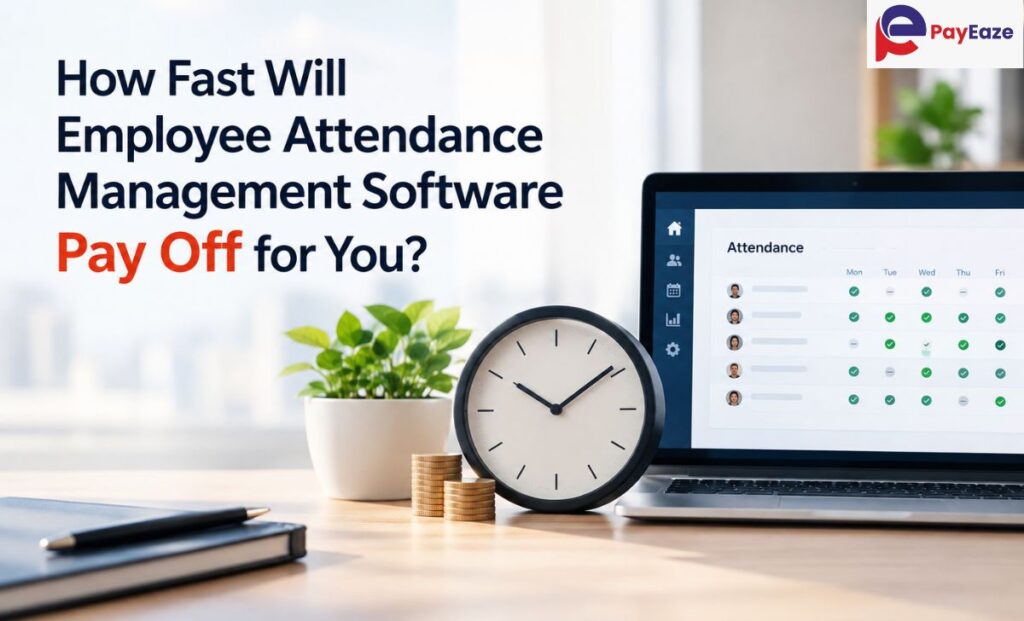
Ask ten business owners when a software purchase should pay for itself and you’ll get ten different answers, most of them hopeful. Attendance tools are no exception. People want a number, and vendors are usually happy to invent one. We’d rather be straight about it. Employee Attendance Management Software does tend to earn its cost back faster than owners expect, mostly because the money it saves is already leaving through payroll every two weeks. At PayEaze, we talk to Canadian employers about this regularly, so here’s how the payback actually plays out and what moves the timeline one way or the other.Start with What You’re Actually Losing
Most attendance losses are boring. Someone arrives twelve minutes late and the sheet says nine o’clock anyway. A manager forgets to approve a half day. A leave request sits in an email thread until payroll closes, then gets typed in by hand, wrongly now and then. Individually, nothing to worry about. Across forty people and fifty weeks, it’s a real amount of money. Then there’s the paperwork itself. In plenty of small offices, one person spends an afternoon each pay period chasing timesheets, squinting at handwriting, and copying figures into the payroll system. That’s paid time too, and usually belongs to someone you’d rather have doing something else. The usual leaks look like this:- Minutes that never get recorded
- Hours spent reconciling instead of working
- Pay corrections made after the fact
- Overtime nobody planned for
A Rough Way to Put a Number on It
Try this on the back of an envelope. Take your headcount, multiply by the average minutes per day that slip through unrecorded, then by the hourly wage, then by working days. With 30 people, six minutes a day, $24 an hour, and about 250 working days, you land near $18,000 a year. Now add the admin side. Five hours per pay period at $30 an hour, across 26 pay periods, comes to $3,900. Together that’s roughly $21,900 in a year. Those are made-up round figures, so swap in your own. The method matters more than the total. If your result comes out well above what a tool costs for a year, payback gets measured in months, not years.What Happens in the First Few Weeks?
The earliest gains come from admin. Once Employee Attendance Management Software is running, clock-ins go into one system on their own. Nobody collects sheets. Nobody sends the “did you forget to punch out Tuesday?” message. Getting ready for payroll shrinks from an afternoon to a quick look over the exceptions. Visibility comes next, and people tend to underrate it. For the first time you can see who is late most often, which weekdays have the most absences, and where overtime piles up. You didn’t pay extra for that. It comes along with the records.The Slower Gains Nobody Puts in a Brochure
After a quarter or so, the quieter benefits start to show. Schedules get built from real attendance instead of assumptions. Overtime gets planned before it happens, not explained after. Leave balances stay accurate, so staff stop asking HR to double-check them. And if someone asks for records, say during a labour-standards inquiry, you can pull them in minutes. None of this produces one big number you could frame. It shows up as fewer fixes and fewer awkward conversations. Over a year, though, those add up.Who Gets There Fastest
Some businesses see returns sooner than others, and it’s fairly predictable. Large hourly teams get there first, because small gaps multiply across headcount. Companies running several shifts or locations do well too, since collecting attendance from different places by hand is slow. And anyone still on paper or shared spreadsheets has the most room to improve. A small office with a tidy process may wait longer for a visible financial return. That’s fine. For them the win is more about clean records and fewer loose ends.The People Side of Attendance
Attendance is partly about trust. When records live in someone’s notebook, every disagreement turns into “I remember it differently.” A shared record settles that without a debate, which cuts down on friction over hours, lateness, and leave. It only works if people use it, though. A short walkthrough before launch, a clear owner for questions, and a firm date to retire the old spreadsheet make a bigger difference than any feature. Adoption is the biggest factor in how quickly a rollout pays off, and getting it right costs almost nothing.Choosing a Tool That Can Actually Deliver
Not every product pays back equally. When you compare options for Employee Attendance Management Software, look closely at:- Whether attendance flows directly into payroll
- Support for your shifts, sites, and ways of clocking in
- Leave and holiday rules that match your own policies
- Reports you’ll genuinely read
- Support staff who answer when you write
Where PayEaze Fits In
PayEaze is a Canadian provider of payroll and attendance tools for businesses that want accurate records without a steep learning curve. Our Employee Attendance Management Software keeps time tracking, leave, and payroll data connected, so what your team records is what gets paid. We keep setup practical on purpose, because a tool people avoid will never pay for itself. If you’d like to see how it would handle your headcount and pay cycle, take a look at the PayEaze attendance management solution.Measure It, Don’t Guess
Plenty of companies buy software and never check whether it worked. Before you launch, write down three things: hours spent preparing attendance each pay period, corrections made after payroll, and total overtime. Check the same three numbers after sixty or ninety days, then again at six months. The difference is your real return. Multiply saved hours by the hourly cost of whoever did the work, add the cost of the corrections you no longer make, and you have a figure you can defend to an owner or a finance team.So, How Fast?
For most businesses, the first returns arrive within a pay period or two, and the bigger gains build over the following months. Your team size, your starting process, and how carefully you roll things out will decide the exact pace. What stays consistent is the pattern: less admin, cleaner records, steadier payroll. When you measure before and after, Employee Attendance Management Software isn’t much of a gamble. If you’re weighing options, PayEaze would be glad to show you what it could look like for your business. Run your numbers first, then decide.FAQs
How long does it take for attendance software to pay for itself?
Most businesses see first returns within a pay period or two, with bigger gains building over the following months.
How do I calculate the return for my own team?
Multiply headcount by minutes lost per day, hourly wage, and working days, add your admin hours, then compare the total with the tool’s yearly cost.
Is attendance software worth it for a small business?
Yes, because even a small team gains cleaner records, faster payroll preparation, and fewer disputes over hours and leave.
What costs does attendance software actually reduce?
It reduces unrecorded minutes, manual timesheet entry, post-payroll corrections, and unplanned overtime.
How can PayEaze help my business get a faster return?
PayEaze keeps time tracking, leave, and payroll data connected and is simple to set up, so your team adopts it quickly and sees savings sooner.